Art
Intent
At Witherley Church of England Primary School, we believe that Art is a vital part of every child’s education. As a small rural school, we embrace the opportunity to provide a personalised, inclusive art curriculum that nurtures creativity, builds skills, and celebrates individuality.
We aim to deliver an art curriculum that:
- Is inclusive and adaptive, ensuring that all children—regardless of ability, background, or need—can access and enjoy art lessons. We tailor our teaching to meet the diverse needs of our pupils, using flexible approaches and differentiated resources.
- Supports skill progression, helping children to develop competence in drawing, painting, sculpture, and other artistic techniques. Skills are built progressively across year groups, with opportunities to revisit and refine learning.
- Encourages creative freedom, allowing children to make independent choices, explore their own ideas, and express themselves through their artwork.
- Reflects our rural setting, using the natural environment as a source of inspiration and integrating outdoor learning into creative projects.
- Promotes emotional well-being, giving children a safe and supportive space to explore their thoughts and feelings through visual expression.
Implementation
We implement our Art curriculum using the Dimensions Curriculum scheme, which provides a clear and structured framework for the progression of skills and knowledge across all year groups. As a small rural school, we adapt this framework to meet the individual needs of our children, ensuring that every pupil has the opportunity to access, engage with, and succeed in art.
We recognise that every child is unique. Our art lessons are designed to be inclusive and flexible, allowing for:
- Differentiated instruction that supports children with varying abilities and learning styles.
- Adaptations for SEND and additional needs, including tailored resources, scaffolded tasks, and alternative media.
- Opportunities for choice and independence, enabling children to select materials and approaches that reflect their personal interests and creativity.
Using the Dimensions long-term progression map, we ensure that:
- Children learn key artistic skills in a structured and age-appropriate way.
- Skills are revisited and reinforced across year groups, allowing for consolidation and mastery.
- Pupils have the chance to deepen their understanding by applying previously learnt techniques in new and creative contexts.
Each unit of learning follows a clear sequence:
- Skill Introduction – Children are taught specific techniques (e.g. shading, colour mixing, texture creation).
- Skill Practice – Pupils explore and experiment with the skill in a guided setting.
- Creative Application – Children apply the skill to a medium or project of their choice, encouraging ownership and personal expression.
- Evaluation and Reflection – Pupils assess their work, discuss their process, and identify areas for improvement or further exploration.
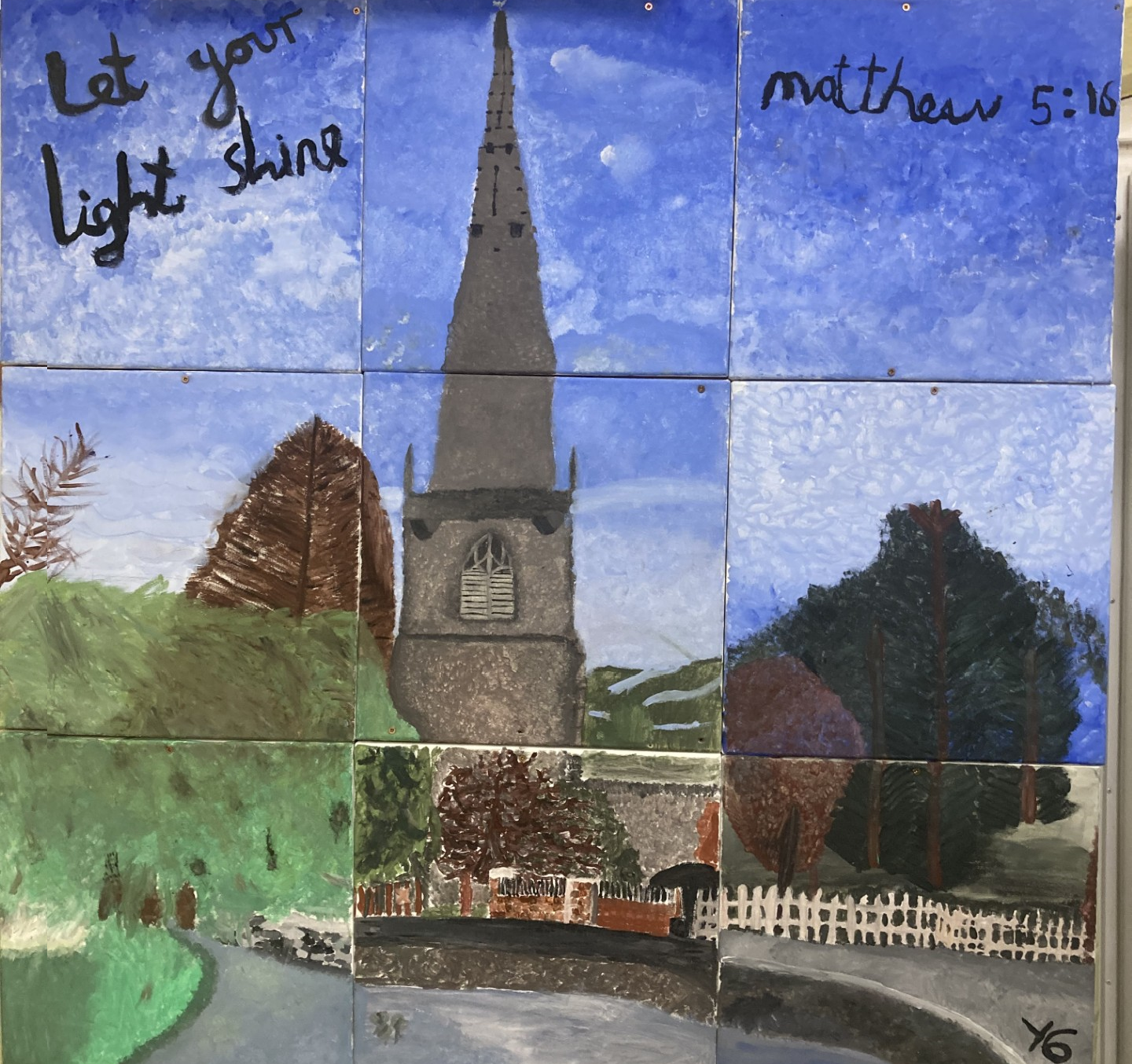
Our rural setting provides rich inspiration for art. We incorporate outdoor sketching, and seasonal themes to connect children with their environment. We also celebrate creativity through:
- Collaborative murals and installations
- Links with local artists, church and community projects
We monitor progress through:
- Sketchbooks that show development over time
- Teacher observations and pupil discussions
Impact
At Witherley C.E Primary School, the impact of our Art curriculum is seen in the confidence, creativity, and competence of our children as they progress through their individual learning journeys.
Through our adapted use of the Dimensions Curriculum framework, we ensure that:
- Children are empowered to make creative choices, applying learned skills to a medium or style that reflects their personal interests and imagination. This fosters independence, ownership, and pride in their work.
- Art is inclusive and accessible, with lessons tailored to meet the needs of all learners. Children with additional needs are supported through differentiated tasks and flexible approaches, ensuring that every pupil can participate fully and achieve success.
- Children become reflective learners, regularly evaluating their own work and learning from the process. This encourages resilience, critical thinking, and a growth mindset.
- Art contributes to emotional well-being, offering a safe and expressive outlet for children to explore their thoughts, feelings, and identities.
- Pupils leave our school with a strong sense of artistic identity, equipped with the skills, vocabulary, and confidence to engage with art in secondary education and beyond.
Ultimately, our goal is for every child to see themselves as an artist—valued, capable, and inspired.